The Donkey: NCERT Class 4 English Poem (Marigold Unit 7)
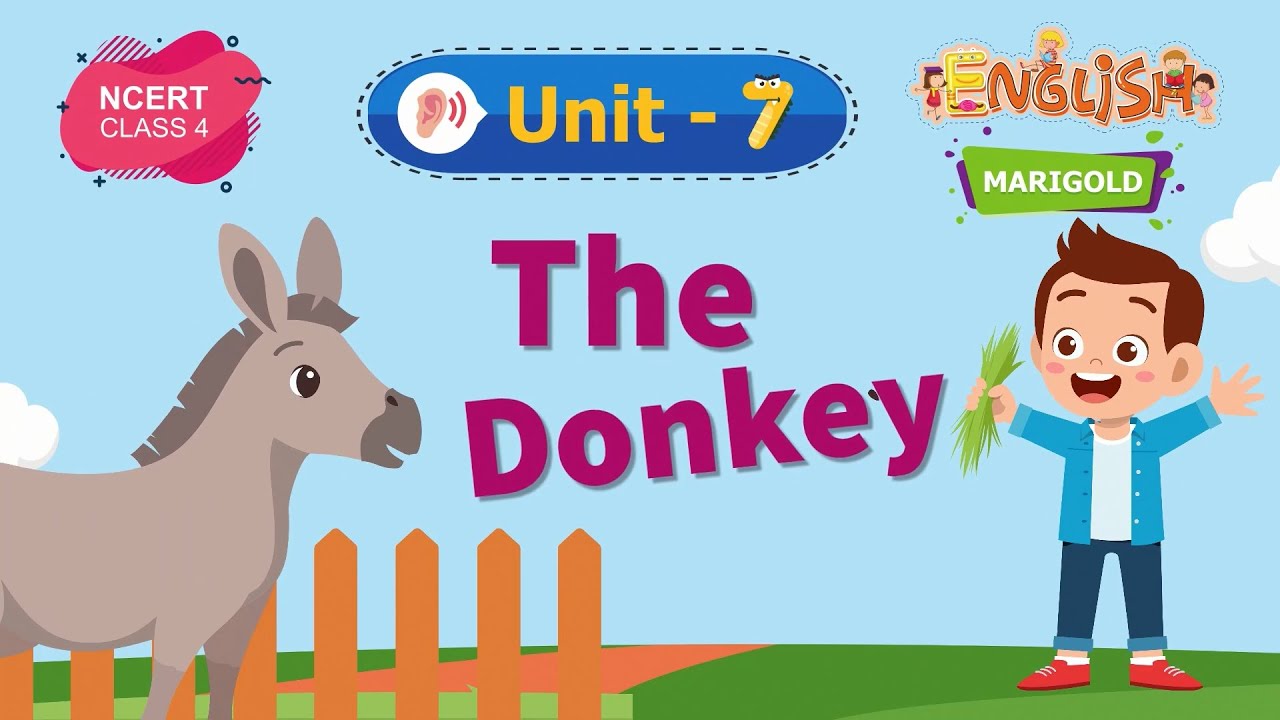
The Donkey is a very short rhyme with a kind heart. It asks what we should do when an animal will not obey, and gives a gentle answer. Children can learn it quickly and talk about caring for animals.
Open now: the CALP Class 4 English course (Santoor)
Every chapter of Santoor, NCERT’s new book, with notes in English and Hindi, say-it-aloud practice with a score, grammar, speaking and writing practice. ₹1,299 for the whole year, and “Start here” and the first chapter’s notes are free to try.
From the NCERT English book Marigold for Class 4, unit 7. NCERT’s newer Class 4 book is Santoor, but many schools still teach Marigold.
Watch: The Donkey
Play the video three or four times. The first time, just listen. Then point at the pictures, and from the third time, say the lines along with the video. Short, repeated listening is how CALP builds a child’s English.
What your child learns
- Rhyming words: go and no, corn and born
- Animal food words: hay, corn
- Saying what you would do with “If I had…”
- Kindness to animals instead of anger
What the poem is about
The speaker imagines having a donkey that will not move. Would they beat it? No, never. Instead, they would give the donkey some hay and some corn to eat.
The speaker believes that with this kind care, the donkey would become the best donkey ever. The message is simple: treat animals with love and kindness, not with anger and force.
New words, with Hindi meanings
- donkey: an animal like a small horse with long ears (हिंदी: गधा)
- wouldn't: would not; refused to (हिंदी: नहीं करता)
- wallop: hit hard (हिंदी: पीटना)
- hay: dried grass that animals eat (हिंदी: सूखी घास)
- corn: grain that animals and people eat (हिंदी: मक्का)
- born: came into the world as a baby (हिंदी: पैदा हुआ)
Talk about it
Ask these aloud after reading or watching. Let your child answer in English if they can, or mix in their home language. Both help.
- What problem does the speaker imagine with the donkey?
- Would the speaker hit the donkey? What would they do instead?
- Why do you think kindness works better than hitting?
- How do you or your family take care of an animal or pet?
Answers for parents
- The donkey will not go or move.
- No, never. They would give the donkey some hay and some corn.
- Sample answer: An animal that is fed and treated well feels safe and happy, so it is more willing to work. Hitting only makes it scared.
- For example: We keep a bowl of water outside for the street dog, and my brother gives it a roti every evening.
Grammar corner: Talking about “If I had…”
We use “If I had…” to imagine something that is not real yet. Then we say what we would do, often with “I would” or “I’d”. The poem imagines having a donkey and says what the speaker would do.
- If I had a puppy, I would take it for a walk every day.
- If I had a garden, I’d grow corn and tomatoes.
- If I had a cow, I would give her fresh grass and water.
Practice at home
- Spot the rhyme: which word rhymes with “corn”? born, hay, go
- Fill in the blank: Horses and donkeys eat dry grass called ___.
- Finish the sentence: If I had a donkey, I would ___.
Answers: 1. born · 2. hay · 3. Sample: If I had a donkey, I would brush it and give it fresh water.
Try this
Act out the rhyme. One child is the stubborn donkey who will not move, and another is the owner. The owner pretends to offer hay and corn, and the donkey happily starts to walk. Then talk about other kind things we can do for animals, such as giving water to birds in summer.
Tip for parents
Ask your child in Hindi first: “अगर तुम्हारे पास गधा हो और वह न चले, तो तुम क्या करोगे?” Listen to the answer, then help them say it in English with “If I had a donkey, I would…”. Mixing Hindi and English words is fine; praise the kind idea and the try.
Questions parents ask
What is the moral of the poem The Donkey?
Treat animals with kindness, not anger. The speaker would never hit a donkey that won’t move, but would feed it hay and corn instead.
What is the poem The Donkey about?
The speaker imagines owning a donkey that will not go. Instead of beating it, they would feed it, and they believe it would then be the best donkey ever. It is Unit 7 of NCERT’s older Marigold book for Class 4.
Which words rhyme in The Donkey?
Go rhymes with no, and corn rhymes with born.
Learn every Class 4 chapter with CALP
Every chapter of Santoor, NCERT’s new book, with notes in English and Hindi, say-it-aloud practice with a score, grammar, speaking and writing practice. ₹1,299 for the whole year.
See the free lessons and enrol →
More from Class 4 English
- A Watering Rhyme (Marigold Unit 7)
- Hiawatha (Marigold Unit 6)
- The Scholar's Mother Tongue (Marigold Unit 6)
- Books (Marigold Unit 8)
- Don't Be Afraid of the Dark (Marigold Unit 5)
- Helen Keller (Marigold Unit 5)