What's in the Mailbox: NCERT Class 3 English Poem (Marigold Unit 8)
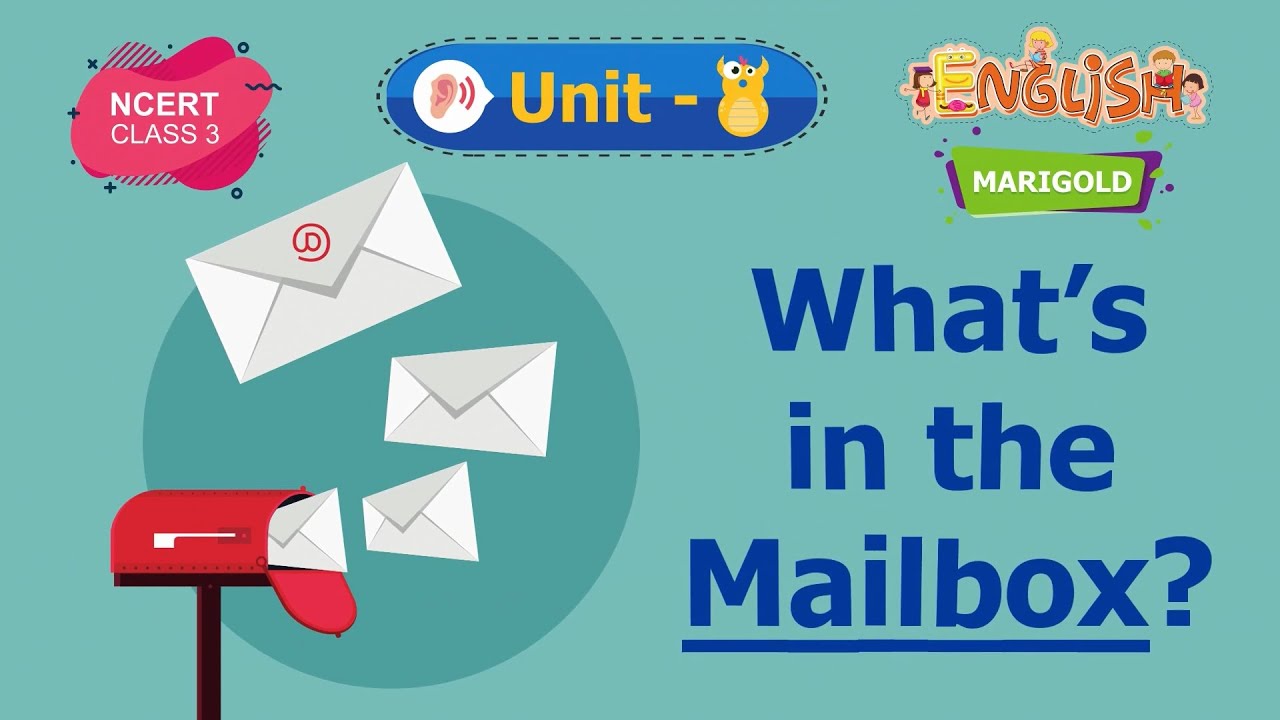
Getting a letter with your own name on it is a special joy. This simple poem shows a child who wants that joy and finds a smart way to get it, which makes it a perfect start for writing a first letter.
Open now: the CALP Class 3 English course (Santoor)
Every chapter of Santoor, NCERT’s new book, with notes in English and Hindi, say-it-aloud practice with a score, grammar, speaking and first writing practice. ₹1,299 for the whole year, and “Start here” and the first chapter’s notes are free to try.
From the NCERT English book Marigold for Class 3, unit 8. NCERT’s newer Class 3 book is Santoor, but many schools still teach Marigold.
Watch: What's in the Mailbox
Play the video three or four times. The first time, just listen. Then point at the pictures, and from the third time, say the lines along with the video. Short, repeated listening is how CALP builds a child’s English.
What your child learns
- Post words: mailbox, postman, letters
- Talking about plans with 'going to'
- Rhyming words: three and me, do and too
- Writing or drawing a short letter
What the poem is about
The child in the poem watches the postman come with two or three letters. But the letters are always for mother or father, and never one for the child.
So the child makes a plan: to write some letters to friends. When the friends write back, the child will get letters too. The poem shows that if we want something, we can take the first step ourselves.
New words, with Hindi meanings
- mailbox: a box where the postman puts letters (हिंदी: डाक पेटी)
- postman: a person who brings letters and parcels to homes (हिंदी: डाकिया)
- letters: written messages sent to someone by post (हिंदी: चिट्ठियाँ)
- most always: almost every time (हिंदी: लगभग हमेशा)
- never: not even once (हिंदी: कभी नहीं)
- though: but still; however (हिंदी: फिर भी)
- answer: to reply; to write back (हिंदी: जवाब देना)
Talk about it
Ask these aloud after reading or watching. Let your child answer in English if they can, or mix in their home language. Both help.
- Who are the letters usually for?
- Why does the child feel left out when the postman comes?
- What does the child decide to do?
- Who would you like to write a letter to, and what would you say?
Answers for parents
- They are for the child's mother or father.
- Because there is never a letter for the child.
- The child decides to write letters to friends, so that they will write back.
- For example: I would write to my Nani and tell her about my new school bag.
Grammar corner: Talking about plans with 'going to'
When we have made a plan, we can say 'I am going to' and then the action. The child in the poem uses this to share a plan to write letters.
- I am going to write a card for my grandmother.
- We are going to visit the post office on Saturday.
- My friend is going to send me a letter from Pune.
Practice at home
- Fill in the blank: The ___ brings letters to our house.
- Spot the rhyme: which word in the poem rhymes with 'do'? And which rhymes with 'three'?
- Make a sentence about your plan for tomorrow with 'I am going to ___'.
Answers: 1. postman · 2. 'Too' rhymes with 'do'; 'me' rhymes with 'three'. · 3. For example: I am going to play cricket with my cousin.
Try this
Help your child write or draw a short letter to a friend, cousin or grandparent. Fold it and “post” it in a pretend mailbox, such as a shoe box or a drawer. You can play postman by delivering the letter and then writing a short reply, so your child gets a letter too.
Tip for parents
Ask in Hindi, “तुम किसे चिट्ठी लिखना चाहोगे?” Let your child tell you the message in Hindi first. Then help them turn one or two lines into English, like “Dear Nani, I miss you.” Even one English line on the letter is worth praise.
Questions parents ask
What is the poem What's in the Mailbox about?
A child sees the postman bring letters, but they are always for the parents. So the child plans to write letters to friends, so that they will write back.
What is the message of What's in the Mailbox?
If you want something, you can take the first step yourself. The child writes letters first in order to get letters back.
Which NCERT book is What's in the Mailbox from?
What's in the Mailbox is Unit 8 of Marigold, NCERT's older English book for Class 3. The newer NCERT English books are Mridang for Class 1–2 and Santoor for Class 3–5.
Learn every Class 3 chapter with CALP
Every chapter of Santoor, NCERT’s new book, with notes in English and Hindi, say-it-aloud practice with a score, grammar, speaking and first writing practice. ₹1,299 for the whole year.
See the free lessons and enrol →
More from Class 3 English
- My Silly Sister (Marigold Unit 8)
- Little Tiger, Big Tiger (Marigold Unit 7)
- Puppy and I (Marigold Unit 7)
- Don't Tell (Marigold Unit 9)
- The Story of the Road (Marigold Unit 6)
- Trains (Marigold Unit 6)